
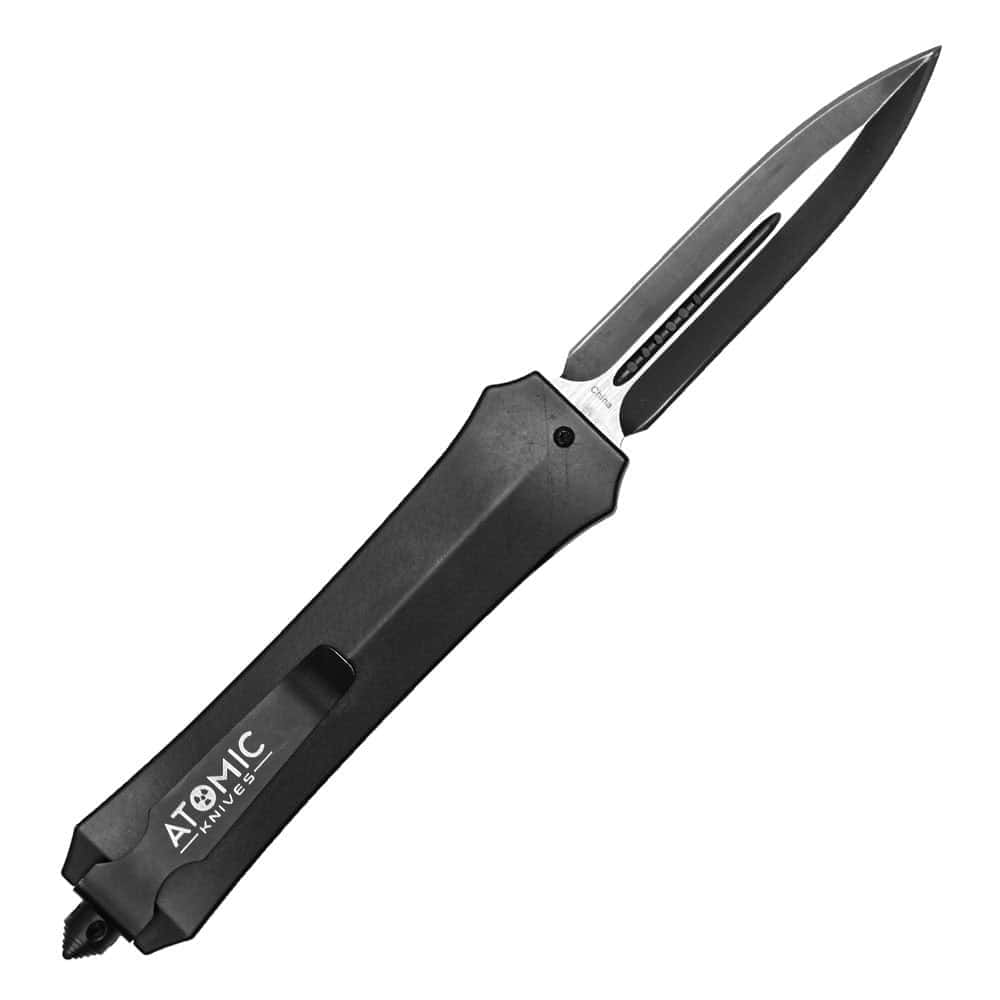
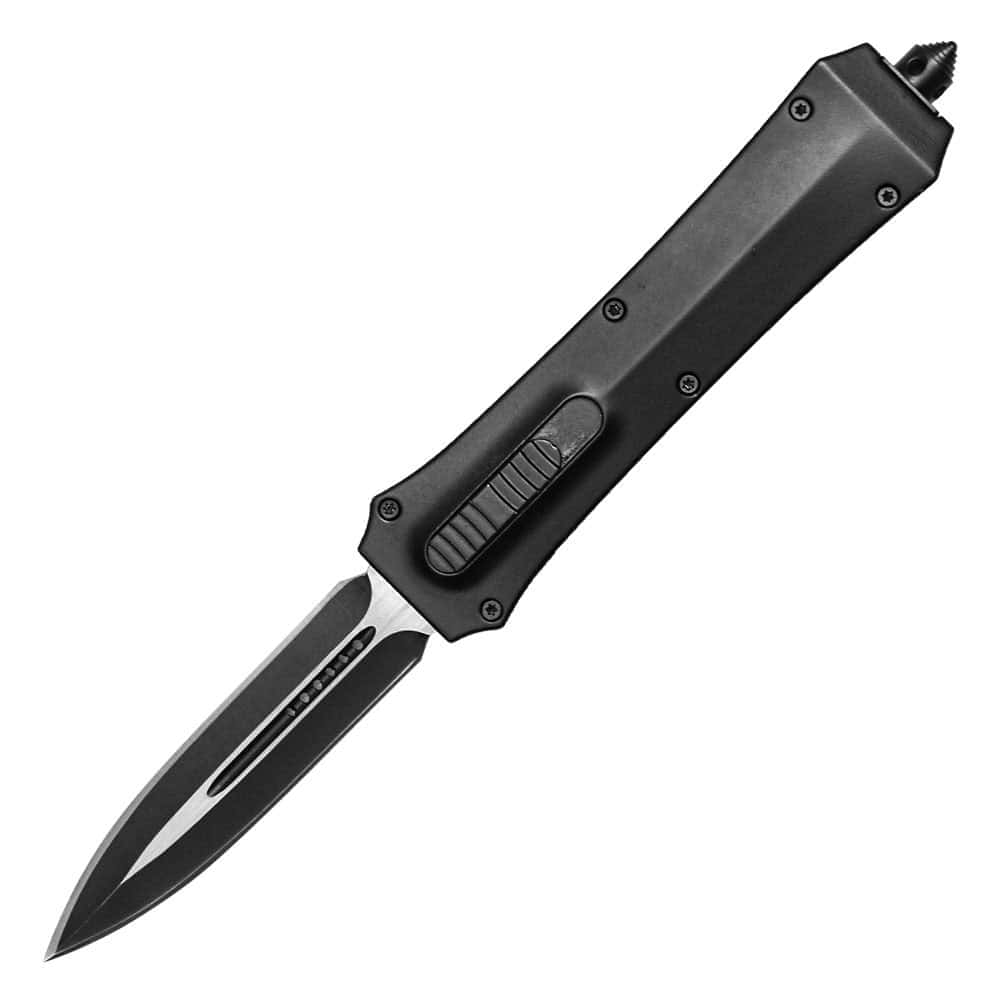
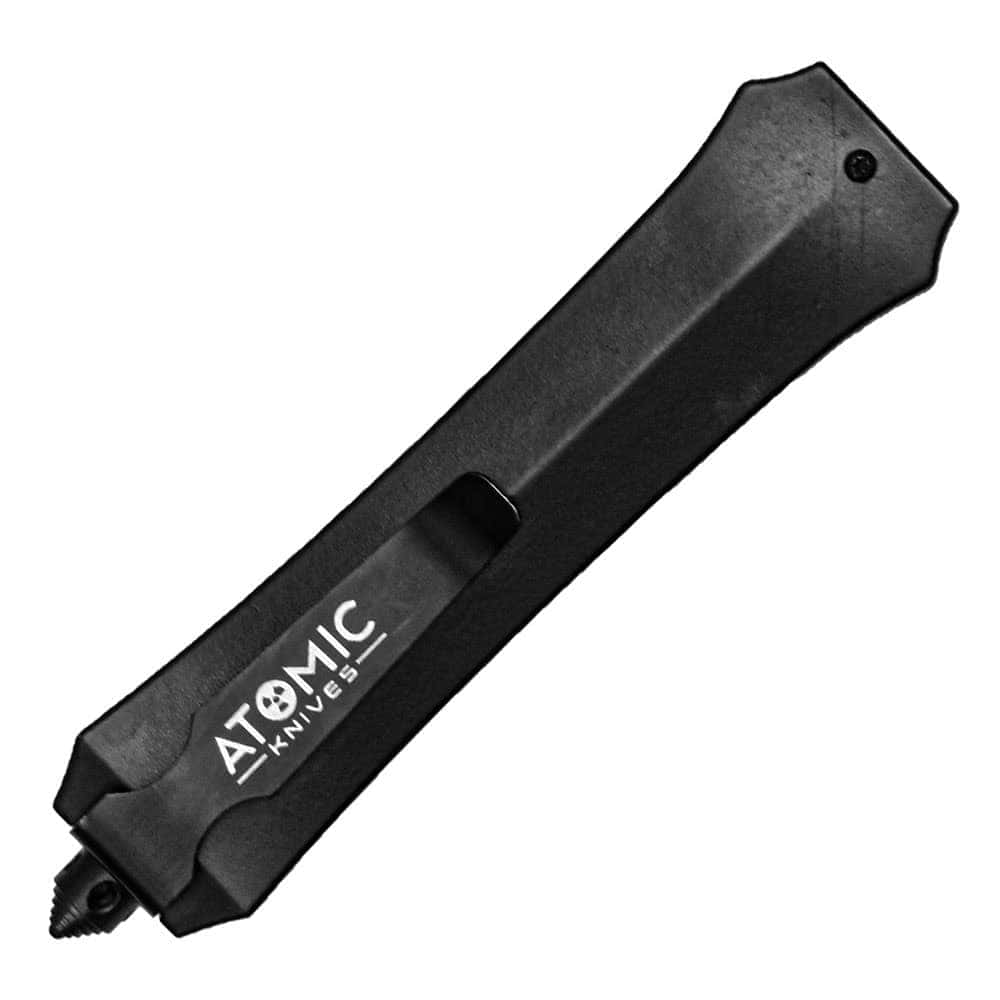
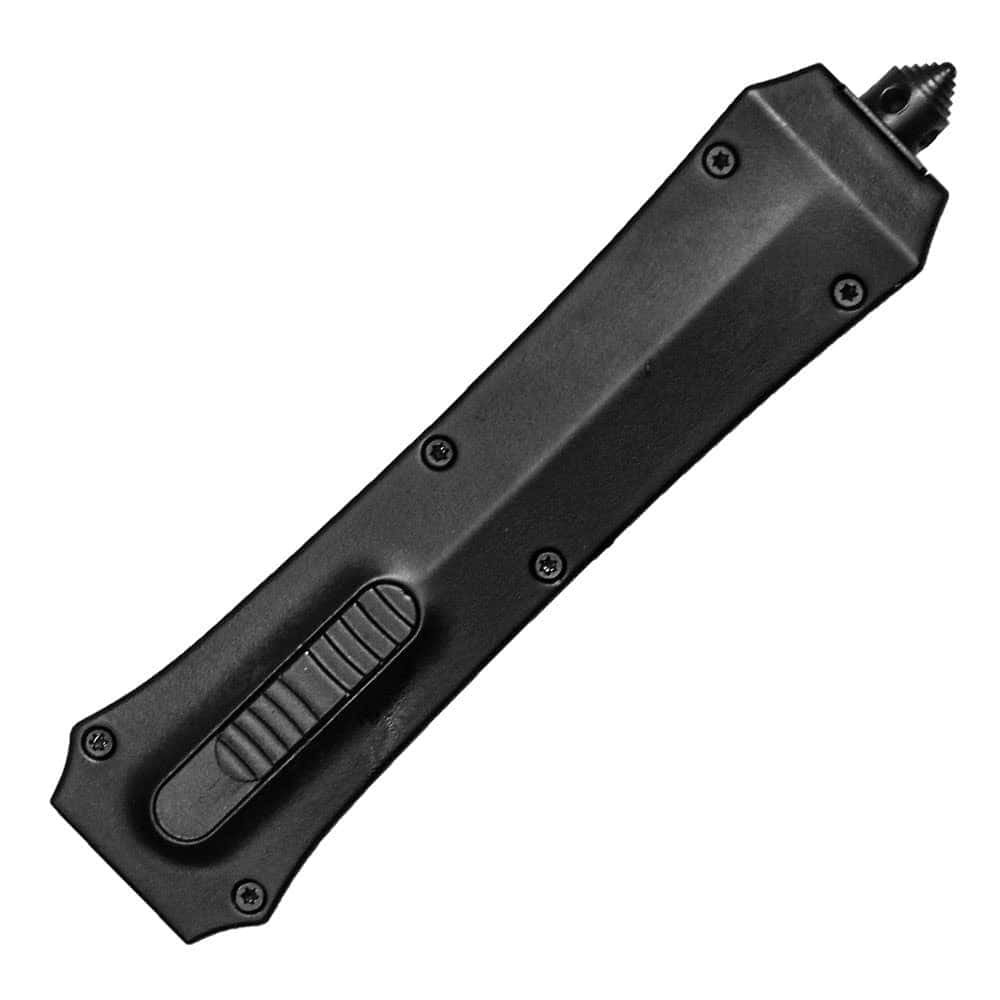
Streetwise OTF Out The Front Automatic Knife Double Edge Blade – 3.75″ Premium Steel, 9.5″ Overall, 5.75″ Closed, Lightning-Fast Deploy and Retract, Black
$69.95
Buy with Confidence
Covered by a 30-Day Money Back Guarantee. If it's not right for you, returns are easy and hassle-free.

Secure checkout • 100% Satisfaction Guaranteed • 30 Day Money Back Guarantee • Easy Returns • Fast Customer Support
Out The Front deployment means the blade fires straight forward through the tip of the handle and retracts the same way — no side swing, no arc. This double-edge OTF uses premium steel construction and gives you a 3.75-inch blade with the same speed going in as coming out.
- OTF (Out The Front) automatic deployment — blade extends and retracts through the handle tip
- Double-edge 3.75-inch premium steel blade
- Lightning-fast deployment with equally fast, positive retraction
- 9.5-inch overall open length, 5.75-inch closed length
- Durable black construction, 0.7 lbs
OTF Mechanics: Why the Deployment Direction Matters
Side-opening automatics swing the blade out from the handle. OTF automatics push the blade straight through the front — forward to deploy, back to retract. The practical difference is significant: OTF deployment requires less lateral clearance and puts the blade in line with your natural pointing direction the moment it appears.
This double-edge model takes that mechanism and pairs it with a 3.75-inch premium steel blade. Both edges are active, which increases cutting versatility and makes the knife genuinely ambidextrous in its cutting capability.
Who This OTF Knife Is For
OTF knives appeal to users who want the fastest possible deployment with the most direct blade presentation. Collectors, enthusiasts, and serious EDC users who want a premium-feeling automatic that operates differently from conventional side-openers will find this mechanism satisfying to use.
The 9.5-inch open length and 5.75-inch closed length put this in medium-large carry territory — it fits a jacket pocket or cargo pocket comfortably, though it’s on the longer side for standard jeans pockets. At 0.7 lbs, it has real weight and presence in hand.
Is This the Right Choice for You?
Choose this knife if you want:
- OTF deployment — the blade exits straight through the front, not to the side
- A double-edge blade for maximum cutting versatility
- A larger, more substantial knife with 9.5-inch open length and premium construction
Consider something else if you need:
- A more compact carry option — at 5.75 inches closed, this doesn’t fit every pocket
- A single-edge blade for tasks where a spine is useful (batoning, controlled cutting) — consider the single-edge OTF model instead
How the OTF Mechanism Works
OTF knives use a linear slide mechanism on the handle spine. Push the slider forward — the blade fires out the front and locks open. Pull the slider back — the blade retracts fully into the handle. The entire sequence takes a fraction of a second and requires only one hand.
The double-edge blade on this model is ground on both sides from tip to heel. Premium steel construction means the edges hold up to real use without deforming under normal cutting loads. The black finish on the handle runs to 9.5 inches open and 1.38 inches wide — a proportional profile that feels substantial without being unwieldy.
OTF mechanisms are mechanically more complex than side-openers, which is reflected in the price point. They reward proper care: keep the mechanism clean and lightly lubricated for consistent, reliable operation.
Quick Comparison: How Does This OTF Knife Stack Up?
| Feature | This OTF Double-Edge | OTF Single-Edge | Side-Open Automatic | Assisted-Opening Knife |
|---|---|---|---|---|
| Deployment Direction | Forward through tip ✓ | Forward through tip ✓ | Side swing | Side swing |
| Blade Edges | Double ✓ | Single | Single or double | Single |
| Blade Length | 3.75 inches ✓ | 3.5 inches | 3.5 inches | Varies |
| Closed Length | 5.75 inches | 5.5 inches | 4.5 inches ✓ | Varies |
| Legal Restrictions | Check local laws | Check local laws | Check local laws | Generally fewer |
| Best For | OTF enthusiasts, double-edge utility | OTF carry, controlled cutting | Compact EDC, pocket carry | Fast access, broader legal use |
Practical Details
Overall length open: 9.5 inches. Closed length: 5.75 inches. Blade length: 3.75 inches. Blade type: double edge. Blade material: premium steel. Weight: 0.7 lbs. Dimensions: 9.5″ x 1.38″. Color: black. Note: OTF automatic knives are regulated — laws vary widely by state and locality. Confirm legal status in your jurisdiction before purchasing or carrying this knife.
For users who want OTF deployment, a double-edge blade, and premium steel construction in a full-size package, this knife delivers all three without compromise.
Frequently Asked Questions
What makes an OTF knife different from a regular automatic knife?
A standard automatic knife deploys the blade in a side arc — the blade pivots out from the handle like a conventional folding knife, just powered by a spring. An OTF knife deploys the blade in a straight line through the front tip of the handle. This means no lateral clearance is needed during deployment, and the blade appears directly in line with the handle axis. OTF knives also retract fully back into the handle, whereas conventional folders simply fold closed.
What are the advantages of a double-edge blade over single-edge?
A double-edge blade is ground and sharpened on both sides from tip to heel. This allows cutting strokes in both directions without repositioning the knife, which is useful in certain utility applications. Double-edge blades also tend to have thinner, more symmetrical profiles than single-edge blades, which can reduce drag during a cut. The tradeoff is that the lack of an unsharpened spine means tasks that use the spine for bracing or leverage aren’t practical.
Are OTF knives legal in my state?
OTF automatic knives face some of the most variable legal treatment of any knife type. Some states permit them freely, some restrict blade length, some require specific carry permits, and others prohibit them entirely for civilian carry. These regulations can also exist at the county and city level independent of state law. Always verify the specific laws in your state and municipality before purchasing. This is your legal responsibility as the buyer.
How do I maintain an OTF knife mechanism?
OTF mechanisms perform best when kept clean and lightly lubricated. Over time, debris and pocket lint can accumulate in the blade channel and affect deployment speed or smoothness. Periodically open the knife and wipe the blade channel with a clean cloth. Apply a light coat of appropriate knife lubricant to the slide mechanism and blade track. Avoid over-lubrication, which attracts debris. With routine care, the OTF mechanism will cycle consistently for the life of the knife.
| Type of Knife | Automatic |
|---|---|
| Overall Length | 9.5 inches |
| Blade Length | 3.75 inches |
| Collapsed Length | 5.75 inches |
| Weight | 0.7 lbs |
| Dimensions | 9.5" x 1.38" |
Additional information
Related products
-

Tactical Black Twist Pen with Glass Breaker – Aircraft Aluminum, Extra Ink Refill Included, 6.25″ Everyday Carry Defense Pen
$10.95 Add to cart -

Streetwise OTF Out The Front Automatic Knife Single Edge Blade – 3.5″ Premium Steel, 9″ Overall, 5.5″ Closed, Lightning-Fast Deploy and Retract, Black
$69.95 Add to cart -

Safety Technology Credit Card Foldable Knife – 2.75-Inch Blade, Blade-Lock, 440 Steel, Wallet-Size, 3.38″ x 2.13″ Folded, 0.1 lbs, Discreet Everyday Carry
$4.95 Add to cart -

Comb Metal Knife Disguised Blade – 3.5″ Half-Serrated Blade, 6.5″ Overall Length, ABS Plastic Handle, Pocket Comb Appearance, Available in Black and Pink
$7.95 Select options This product has multiple variants. The options may be chosen on the product page

Reviews
There are no reviews yet.