


Safety Technology 129dB Air Horn Compact Canister – Coast Guard Compliant for Boats Up to 65 Feet, Self-Defense Signal, 5⅛” x 1¾”, 0.3 lbs
$14.95
Buy with Confidence
Covered by a 30-Day Money Back Guarantee. If it's not right for you, returns are easy and hassle-free.

Secure checkout • 100% Satisfaction Guaranteed • 30 Day Money Back Guarantee • Easy Returns • Fast Customer Support
At 129 decibels, this air horn is loud enough to be heard across open water, through a crowded parking lot, or over the noise of an outdoor event. It meets US Coast Guard requirements for vessels up to 65 feet and fits in one hand. That combination — regulatory compliance plus true portability — covers both marine safety and general personal safety in a single device.
- 129dB output meets US Coast Guard requirements for boats up to 65 feet
- Compact 5⅛” x 1¾” canister fits in a hand, bag, backpack, or boat storage compartment
- No batteries — pressurized canister delivers immediate, reliable sound output
- Effective as a self-defense deterrent against people and animals in outdoor settings
- Weighs 0.3 lbs — lightweight enough for hiking packs, kayak bags, and everyday carry
129 Decibels: What That Means in Practice
129dB is approximately the volume of a jet engine at close range. In open air, that level of sound carries over significant distances and causes immediate disorientation for anyone in close proximity. For marine use, that means an audible distress signal that can be heard by nearby vessels. For self-defense purposes, it means a deterrent loud enough to attract attention from bystanders and disrupt the focus of anyone in immediate range.
The canister format delivers sound instantly — press and it fires. There’s no warm-up, no battery check, and no moving parts to fail. Pressurized canisters are among the most mechanically reliable signal devices available, which matters when you actually need the thing to work.
Who This Air Horn Is For
Boaters who need a Coast Guard-compliant sound signal device on vessels up to 65 feet. Marine regulations require an audible signaling device on board — this canister satisfies that requirement in a compact, easy-to-stow form that doesn’t take up meaningful space.
Hikers, trail runners, cyclists, and campers who spend time in areas with wildlife or remote terrain. An air horn’s range and volume exceeds a whistle significantly and requires no breath — useful if you need to signal for help or deter an animal from a distance.
Anyone looking for a non-contact personal safety tool for parking structures, running routes, or situations where a loud audible deterrent is appropriate. The air horn doesn’t require training, close contact, or any special skill to deploy effectively.
Is This the Right Choice for You?
Choose this Air Horn if you want:
- Coast Guard-compliant sound signaling for boats up to 65 feet
- A battery-free audible deterrent for outdoor and self-defense use
- Maximum volume in minimum size and weight
- A reliable, single-action device with no operating complexity
Consider something else if you need:
- An ongoing or sustained alarm — canister air horns have finite capacity
- A personal alarm that activates hands-free or automatically
How It Works and Why It’s Reliable
The pressurized canister contains compressed air that drives sound through a horn nozzle when the trigger is pressed. Output is immediate and consistent from the first use. Unlike battery-powered alarms, there’s no charge level to monitor and no electronics to degrade. The limiting factor is canister pressure — each burst depletes a portion of the supply, so the device has finite capacity rather than indefinite battery life.
At 5⅛” x 1¾” and 0.3 lbs, it fits in a jacket pocket, a dry bag, a glove box, or a boat’s safety kit without taking meaningful space. The compact form doesn’t compromise output — 129dB is the same regardless of canister size within this class of device.
For marine use, position it where it’s accessible quickly — not buried in a storage hatch. For personal use, it’s most effective when carried where you can reach it without searching.
Quick Comparison: How Does the Air Horn Stack Up?
| Feature | Air Horn (This Product) | Electronic Personal Alarm | Safety Whistle | Pepper Spray |
|---|---|---|---|---|
| Sound Output | 129dB ✓ | 120-130dB ✓ | ~100-110dB | None |
| Battery Required | No ✓ | Yes | No ✓ | No ✓ |
| Coast Guard Compliant | Yes ✓ | No | Depends on vessel size | No |
| Wildlife Deterrent | Yes ✓ | Limited | Limited | Yes ✓ |
| Range of Effect | Very long ✓ | Long | Moderate | 10-15 feet |
| Best For | Marine, outdoor, general deterrent | Personal carry, everyday use | Hiking, emergency backup | Direct personal defense |
Practical Details
The air horn measures 5⅛” x 1¾” and weighs 0.3 lbs. No batteries required — pressurized canister operation. Sound output is 129dB. Effective range for US Coast Guard compliance covers vessels up to 65 feet. Compact enough for hand carry, boat storage compartments, hiking packs, and gear bags. From Safety Technology.
Whether you’re on the water or on a trail, 129dB is hard to ignore — and that’s the entire point.
Frequently Asked Questions
Does this actually satisfy US Coast Guard sound signal requirements?
Yes. The Coast Guard requires an audible signaling device on vessels of various sizes — this air horn meets requirements for boats up to 65 feet. It’s worth confirming the specific requirement for your vessel type, but for most recreational boats in that size range, this canister qualifies. Keep it accessible on board, not stored below in a way that makes it unreachable in an emergency.
How many blasts does the canister provide before it’s empty?
The number of blasts depends on duration — short, regulatory-length blasts (about one second each) yield more uses than sustained holds. Typical canisters of this size provide enough capacity for standard marine use across a boating season when used for signaling only. If you’re also using it for practice or testing, capacity depletes faster. The canister is not refillable — replace it when pressure noticeably drops.
Is this effective for deterring wildlife like bears or dogs?
Air horns are widely used as a bear deterrent and are recommended by many wildlife agencies as a non-lethal tool for creating distance from wildlife. The sudden, loud sound typically causes startled animals to retreat. For aggressive dogs or other animals at close range, the 129dB output is generally effective as a deterrent. It’s not a guarantee, but it’s a legitimate tool in that application.
Can I carry this in a car or hiking pack without worrying about accidental discharge?
The trigger requires deliberate downward pressure to activate — it won’t discharge from being jostled in a bag or compressed by other gear. Storing it upright in a bag pocket or boat storage compartment is fine. Avoid storing it in high-heat environments like a sealed car in summer, as extreme heat can affect pressurized canisters.
| Manufacturer | Safety Technology |
|---|---|
| Decibles | 129 db |
| Range | 65 feet |
| Weight | 0.3 lbs |
| Dimensions | 5 1/8" x 1 3/4" |
Additional information
Related products
-

Cat Strike Self-Defense Keychain Made in USA – Polymer Plastic, Pointed Ear Spikes, Fits Key Ring, 3.25 x 2.13 Inches, 0.1 lbs, Six Colors Including Glow-in-the-Dark
$8.97 Select options This product has multiple variants. The options may be chosen on the product page -
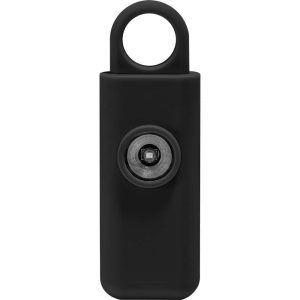
Personal Panic Alarm 130dB with 350-Lumen Strobe Light – Pull-Pin Activation, Keychain Attachment, 2 CR2032 Batteries Included, ABS Housing
$15.00 Select options This product has multiple variants. The options may be chosen on the product page -

Safety Technology 3-in-1 Personal Alarm 130dB with LED Flashlight – Belt Clip, Door/Window Attachment, Laptop Security, Strobe Light, 50-Lumen LED, 9V Battery
$11.95 Add to cart -

Heart Attack Self-Defense Keychain 3.5-Inch ABS Plastic Knuckle Weapon – Fits Key Ring, Between-Finger Grip, 0.05 lbs, Black, Pink, Purple
$4.95 Select options This product has multiple variants. The options may be chosen on the product page

Reviews
There are no reviews yet.