


Dummy Dome Security Camera with Flashing LED Light – White ABS Housing, HD Camera Appearance, Motion-Detection LED, Wall Mount Included, 3 AAA Battery Operated
$8.95
Buy with Confidence
Covered by a 30-Day Money Back Guarantee. If it's not right for you, returns are easy and hassle-free.

Secure checkout • 100% Satisfaction Guaranteed • 30 Day Money Back Guarantee • Easy Returns • Fast Customer Support
White dome cameras are the standard in commercial spaces — offices, retail stores, healthcare facilities — because they blend into drop ceilings and white walls. This dummy unit matches that profile exactly, with a flashing red LED that signals active recording without any wiring or recording infrastructure behind it.
- Flashing red LED mimics active surveillance indicator light
- White ABS plastic housing — matches standard commercial ceiling aesthetics
- Larger profile at 5 7/8″ x 3½” for increased visual presence
- Runs on 3 AAA batteries with included wall mount hardware
- 0.55 lbs — stable wall or ceiling installation with provided screws
Commercial Appearance, Zero Infrastructure
White dome cameras are what people see in grocery stores, medical offices, schools, and corporate lobbies. The format is recognized. This dummy camera copies that form factor — the white housing, the tinted dome, the size — and adds a flashing LED to complete the picture. From a normal viewing distance, it reads as a functioning surveillance unit.
The practical application is supplementing real cameras with visible dummy units in areas where full coverage isn’t cost-effective, or providing apparent surveillance in spaces where actual recording isn’t necessary.
Who This Dummy Camera Is For
Small business owners who want coverage across a full floor plan without the expense of a complete multi-camera NVR system. A few real cameras at cash registers and entry points, with dummy units filling in the rest of the space, achieves broad visible coverage at a manageable cost.
Property managers, office administrators, and homeowners with white or light-colored ceilings where a black camera would stand out. The white housing integrates more naturally into those environments, making placement less conspicuous while the camera itself remains visible as a deterrent.
Is This the Right Choice for You?
Choose this dummy camera if you want:
- Commercial-style dome appearance for offices, retail, or healthcare spaces
- White housing that integrates with light-colored ceilings and walls
- Larger visible profile than compact dummy cameras
- No installation complexity — battery powered, mounts with included hardware
Consider something else if you need:
- Actual video recording or remote monitoring capability
- Outdoor-rated housing for exterior installation
How It Works as a Deterrent
The white dome housing is sized and shaped to match the HD dome cameras commonly deployed in professional settings. At 5 7/8″ x 3½”, it has enough physical presence to register clearly from across a room. The tinted dome cover obscures the interior — a detail that makes the unit harder to identify as non-functional on casual inspection.
The flashing red LED is the active element. It runs continuously on 3 AAA batteries, providing the blinking indicator that people associate with recording devices. Combined with the realistic housing and professional mounting position, it creates a credible surveillance presence without any of the backend infrastructure.
Wall mount hardware is included. The unit installs with standard screws and requires no special tools or electrical work.
Quick Comparison: How Does This Dummy Camera Stack Up?
| Feature | White Dummy Dome Camera | Wired IP Camera | Wireless Smart Camera | Doorbell Camera |
|---|---|---|---|---|
| Setup Time | 5 min ✓ | 1–3 hours | 30–60 min | 30–60 min |
| Records Footage | No | Yes ✓ | Yes ✓ | Yes ✓ |
| Monthly Cost | None ✓ | None–low | $3–$10/mo | $3–$10/mo |
| White Housing Option | Yes ✓ | Some models | Some models | Rarely |
| Requires Wi-Fi | No ✓ | No | Yes | Yes |
| Best For | Commercial deterrence, light-colored interiors | Primary recording locations | Remote monitoring | Front door monitoring |
Practical Details
Housing material: white ABS plastic. Dimensions: 5 7/8″ x 3½”. Weight: 0.55 lbs. Power: 3 AAA batteries. Includes flashing red LED and wall mount hardware with screws. No recording capability — visual deterrent only. Designed for indoor use.
Position it at ceiling height in a visible location, keep the batteries fresh, and it provides the surveillance appearance your space needs without the system cost.
Frequently Asked Questions
How is this different from the black dome dummy camera?
The primary difference is color and size. This white model is slightly larger at 5 7/8″ x 3½” versus 4½” x 2¾” for the black version, and runs on 3 AAA batteries rather than 2 AA. The white housing is better suited to commercial interiors, drop-tile ceilings, and light-colored walls where a white dome camera is the expected aesthetic. Both units share the same flashing LED deterrence function.
How realistic does it look up close?
At normal ceiling height and typical viewing distances, it matches the visual profile of a working dome camera effectively. The tinted dome cover, realistic housing shape, and flashing LED all contribute to the appearance. Someone standing directly underneath and examining it carefully may notice the lack of cable connections, but opportunistic deterrence doesn’t depend on close inspection — it works on the initial visual read from across a room.
How often do the batteries need replacing?
With quality AAA alkaline batteries, most users get several months of continuous operation. The LED flash cycle is low-draw, so battery life is generally good. Checking every 3–4 months and replacing when the flash rate slows keeps the deterrent effect consistent. Lithium AAA batteries extend the interval further, especially in temperature-variable environments like garages or storage areas.
Can this be used alongside real cameras?
That’s one of the most practical applications. Using real cameras at critical monitoring points — entry doors, cash handling areas, parking lot coverage — and supplementing with visible dummy units in adjacent areas gives broad apparent coverage without proportional cost. The key is consistent placement: mount dummy units at the same height and angle as real cameras so the overall system looks uniform.
| Color | White |
|---|---|
| Battery | 3 AAA |
| Material | ABS Plastic |
| Included | Flashing Red LED, Wall Mount |
| Weight | 0.55 lbs |
| Dimensions | 5 7/8" x 3 ½" |
Additional information
Related products
-
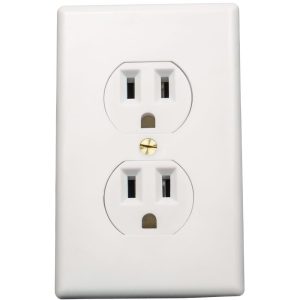
Wall Socket Diversion Safe – Realistic Electrical Outlet Hidden Storage, 2 3/16″ x 2″ x 5″ Interior, Customizable Faceplate, 0.41 lbs
$9.95 Add to cart -

Book Diversion Safe – Realistic Hardcover Hidden Safe, 7¾” x 4″ x 1″ Interior, Stores Jewelry, Cash & Small Valuables, Bookshelf Concealment, 1.33 lbs
$15.95 Add to cart -

Coffee Can Diversion Safe – Screw-Off Bottom, 2.875″ x 3.5″ Hidden Compartment, Realistic Coffee Canister Design for Kitchen Storage
$39.95 Add to cart -

Ginger Ale Diversion Safe – Hidden Compartment Can Safe, Screw-Top Lid, 1″ x 3.5″ Interior, Weighted Like Full Can, Secure Valuables at Home
$9.95 Add to cart

Reviews
There are no reviews yet.